
(Photo credit: Ben Gwilliam)
After my recent enjoyable experience of reading Charles de Lint’s novel, Spirits in the Wires, with Kailana, we both felt that more de Lint needed to occur during this year’s Once Upon a Time Challenge. So here we are, along with fellow reader Susan, savoring a trip through de Lint’s short story collection, Tapping the Dream Tree. We will be reading three stories each week and will be answering one question having to do with each story. The idea is to talk about the stories without, hopefully, spoiling too much of what is written. Be warned that there may be some spoilers all the same. Kailana asked the questions for this week’s selections.
Charles de Lint is an author whose works feature, among other things, artists and other creative folk. And to honor the spirit of that I will be including images I find online, and crediting their creators, that in my mind fit thematically with each of the stories. I thought it would be a wonderful way to introduce you to other creative people and to honor, in some small way, the magic that Charles de Lint weaves within his stories.

(Photo credit: Ulf Klose)
1. One of the common themes in de Lint’s books is the use of music. What did you think of the musical elements of in ‘Ten for the Devil’? Did it make a believable story?
This almost feels like a trick question, given that we are talking about a story that features spirits traveling between worlds and El Diablo himself. 🙂 But to answer it from my viewpoint, yes I believe it does. If you have read Charles de Lint then you no doubt know that in his created universe, music can be a very powerful tool, and one that can be used to open doorways between worlds, or between the various aspects, or layers, of our world. But de Lint didn’t create this idea. We’ve all heard the old adage, “music soothes the savage beast” or some variation of that saying. And stories far, far back revolve around music having a spiritual/magical component. The whole idea of selling one’s soul at the crossroads for musical talent is another example. And given that Lucifer is often referred to as the ‘angel of music’, it does make it “believable” having a story where music and the Devil are twined together.
Have to admit that as I was reading this one I kept thinking of Charlie Daniel’s song “The Devil Went Down to Georgia”.
(Photo Credit: Thomas Drevon)
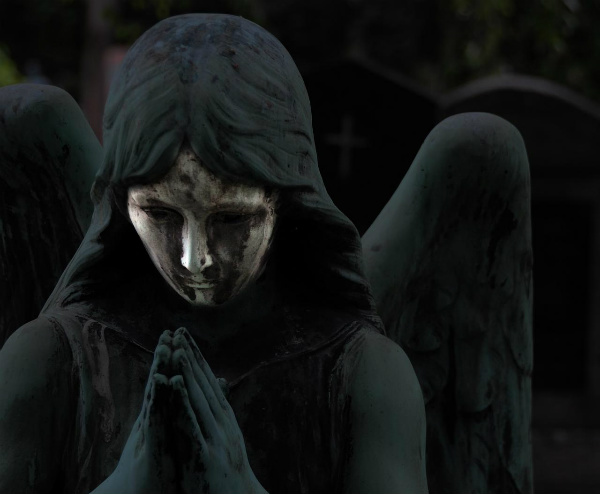
2. Once again ‘Wingless Angels’ uses music as, what turns out to be, a major plot device. What did you think of the way music was used? What were your thoughts on a canister of film turning out to predict the future? Were you skeptical of the story at all?
I looked at the publication dates of these two stories and they were published two years apart, but I wonder when de Lint wrote them? Both stories seem to have a very strong link between spiritual beings (here fallen angels, in the first story the Devil) and the ideas of music and sadness. If one spends time thinking about the angels that rebelled against God, thinking about them from our human perspective, it is easy to think that they must be sad and regretful about what they lost by backing the wrong side, as it were. I think de Lint handled this idea very well with his use of music in the climax of the story. The canister of film idea was more science fictional than one usually sees in a de Lint story, but I did like the idea. It didn’t quite make the story fit nicely in the rest of the Newford universe, but I didn’t mind it.
This story, because of the angels, has such a Dr. Who feel to it, don’t you think? I couldn’t help but think of those angels when reading this story.
(Photo Credit: Jorge Bernal)
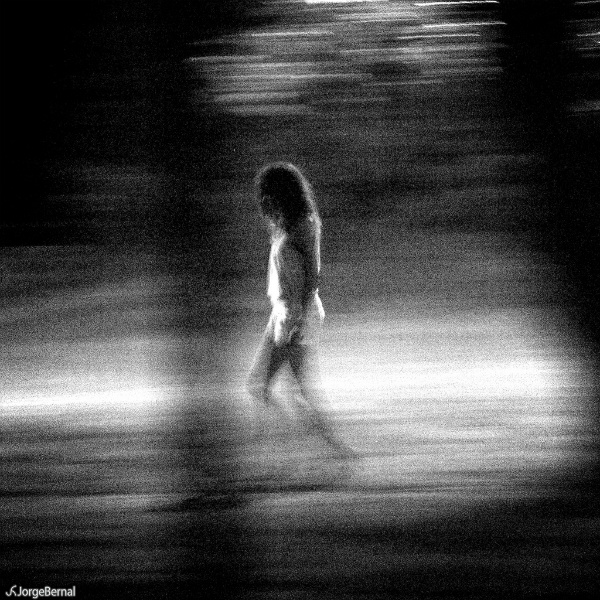
3. The third story, ‘The Words That Remain’, was a bit of a ghost story, but it also used ideas that we can probably relate to ourselves at one time or another. What did you think of how de Lint chose to address this?
I thought the story was fantastic. A great example of many of the things de Lint does so well, and in this case he does so in a very short but effective story. It reminded me a great deal of the whole “shadows” concept that de Lint has in Newford, where kids put all the stuff they don’t like about themselves aside, into their shadow, and then cut the shadow off, effectively cutting out parts of who they really are. In this case that concept gets examined in a ghost story. It also tackles a subject I suspect many of us can relate to: the idea of settling for things, in our careers and elsewhere, rather than pursuing our dreams and what that does to the part of us that has those dreams. Some people can nurse dreams and passions along for years and they eventually conquer whatever is holding them back and pursue those dreams. But what of those who don’t, or can’t, or won’t? What happens when a dream truly dies? What do we lose? What of the person we could have been, or would have been? This would be a great story to use in a psychology class.
And I also have to share that de Lint’s description of Mary, through the voice of Christy Riddell, was just brilliant. I found that paragraph to be a really stand-out piece of writing, one that is a snapshot of Charles de Lint’s skill.
_____________________________
This week we read three stories that all had something of a ‘haunting’ angel to them, from spirits being drawn into our world to scary angelic beings to a traditional ghost story. I don’t recall reading a lot of stories from de Lint that have such an autumnal, ghostly feel but these did in their own way.
Each featured characters I’ve seen in other stories, characters that I am very fond of, but as is true with most of what de Lint writes, you can jump in anywhere and get a good feel for what is happening.
Look forward to next week’s offerings.
Please take some time to check out the other posts by:
and Susan (there will be a link when Susan gets her post up)
I need to read this one as well as “Spirits in the Wires.” Charles de Lint’s books are special. He’s one of those few writers that can take any subject, no matter how depressing, and turn it into an uplifting and even lighthearted story filled with hope and magic.
His books really are. Spirits in the Wires was very, very good. And one of the fun things about the first story in this book is it features a character who played a really prominent part in Spirits in the Wires.
I haven’t read any de Lint yet but this post and some of the reviews by Grace make me want to. And I love that Charlie Daniel’s song. I may have to listen to that now.
He is worth adding to your list of authors to read. He recommends starting with the Dreams Underfoot collection and I agree with him. It is a great introduction to Newford and to many of these characters through the short stories it contains.
Any idea how badly this makes me want to go dig through boxes to find Dreams Underfoot (the only book of his short stories I have)?!! Really really badly!!!
It would be worth it Debi! What a great collection that is.