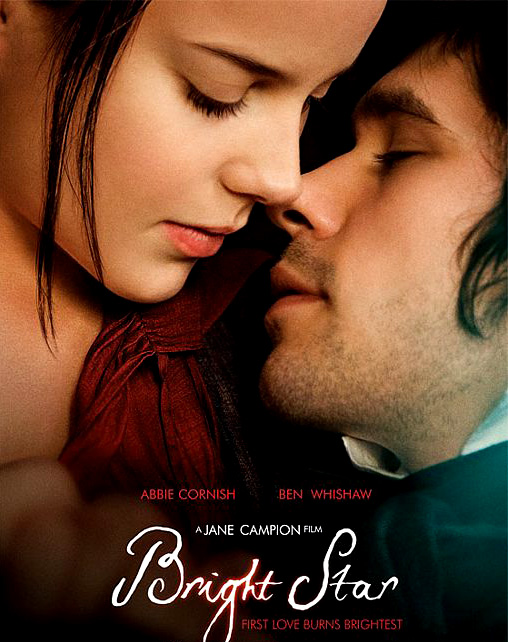
Bright Star ~John Keats~
Bright star, would I were stedfast as thou art—
Not in lone splendour hung aloft the night
And watching, with eternal lids apart,
Like nature’s patient, sleepless Eremite,
The moving waters at their priestlike task
Of pure ablution round earth’s human shores,
Or gazing on the new soft-fallen mask
Of snow upon the mountains and the moors—
No—yet still stedfast, still unchangeable,
Pillowed upon my fair love’s ripening breast,
To feel for ever its soft fall and swell,
Awake for ever in a sweet unrest,
Still, still to hear her tender-taken breath,
And so live ever—or else swoon in death.
ODE TO A NIGHTINGALE
by: John Keats (1795-1821)
I.
My heart aches, and a drowsy numbness pains
My sense, as though of hemlock I had drunk,
Or emptied some dull opiate to the drains
One minute past, and Lethe-wards had sunk:
‘Tis not through envy of thy happy lot,
But being too happy in thy happiness,–
That thou, light-winged Dryad of the trees,
In some melodious plot
Of beechen green, and shadows numberless,
Singest of summer in full-throated ease.
II.
O for a draught of vintage that hath been
Cool’d a long age in the deep-delvèd earth,
Tasting of Flora and the country green,
Dance, and Provençal song, and sunburnt mirth!
O for a beaker full of warm South,
Full of the true, the blissful Hippocrene,
With beaded bubbles winking at the brim,
And purple-stainèd mouth;
That I might drink, and leave the world unseen,
And with thee fade away into the forest dim:
III.
Fade far away, dissolve, and quite forget
What thou among the leaves hast never known,
The weariness, the fever, and the fret
Here, where men sit and hear each other groan;
Where palsy shakes a few, sad, last gray hairs,
Where youth grows pale, and spectre-thin, and dies;
Where but to think is to be full of sorrow
And leaden-eyed despairs,
Where Beauty cannot keep her lustrous eyes,
Or new Love pine at them beyond to-morrow.
IV.
Away! away! for I will fly to thee,
Not charioted by Bacchus and his pards,
But on the viewless wings of Poesy,
Though the dull brain perplexes and retards:
Already with thee! tender is the night,
And haply the Queen-Moon is on her throne,
Clustered around by all her starry Fays;
But here there is no light,
Save what from heaven is with the breezes blown
Through verdurous glooms and windless mossy ways.
V.
I cannot see what flowers are at my feet,
Nor what soft incense hangs upon the boughs,
But, in embalmèd darkness, guess each sweet
Wherewith the seasonable month endows
The grass, the thicket, and the fruit-tree wild;
White hawthorne, and the pastoral eglantine;
Fast fading violets cover’d up in leaves;
And mid-May’s eldest child,
The coming musk-rose, full of dewy wine,
The murmurous haunt of flies on summer eves.
VI.
Darkling I listen; and for many a time
I have been half in love with easeful Death,
Call’d him soft names in many a musèd rhyme,
To take into the air my quiet breath;
Now more than ever seems it rich to die,
To cease upon the midnight with no pain,
While thou art pouring forth thy soul abroad
In such an ecstasy!
Still wouldst thou sing, and I have ears in vain–
To thy high requiem become a sod.
VII.
Thou wast not born for death, immortal Bird!
No hungry generations tread thee down;
The voice I hear this passing night was heard
In ancient days by emperor and clown:
Perhaps the self-same song that found a path
Through the sad heart of Ruth, when, sick for home,
She stood in tears amid the alien corn;
The same that oft-times hath
Charm’d magic casements, opening on the foam
Of perilous seas, in faery lands forlorn.
VIII.
Forlorn! the very word is like a bell
To toll me back from thee to my sole self!
Adieu! the fancy cannot cheat so well
As she is fam’d to do, deceiving elf.
Adieu! adieu! thy plaintive anthem fades
Past the near meadows, over the still stream,
Up the hill-side; and now ’tis buried deep
In the next valley-glades:
Was it a vision, or a waking dream?
Fled is that music: — Do I wake or sleep?
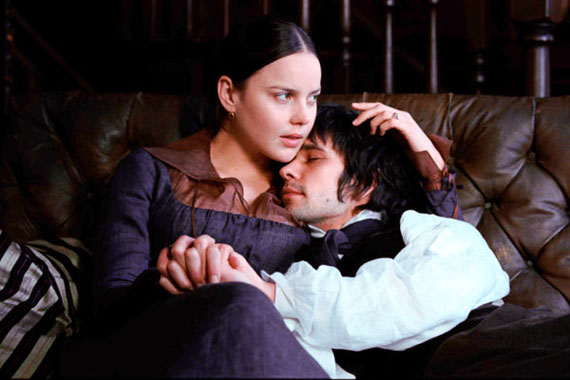
(For those who don’t know the true story of poet John Keats, upon which this film is based, and wish to remain in ignorant bliss, I suggest skipping on until you get past the next image.)
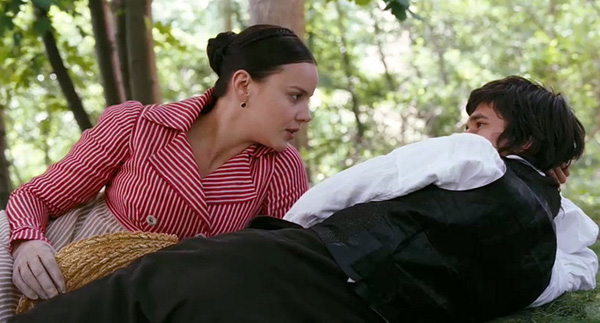
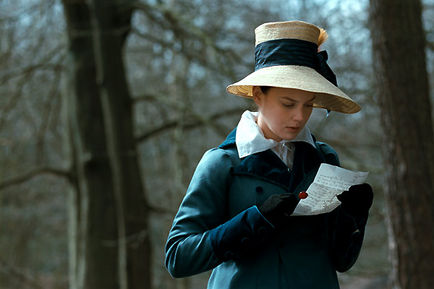
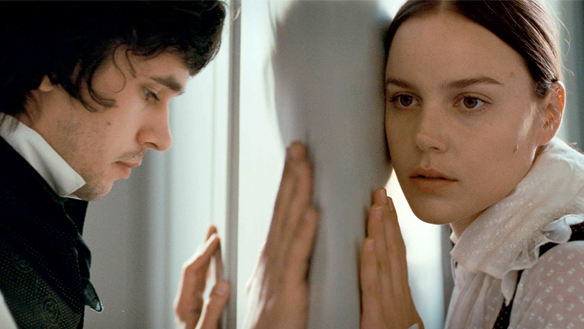
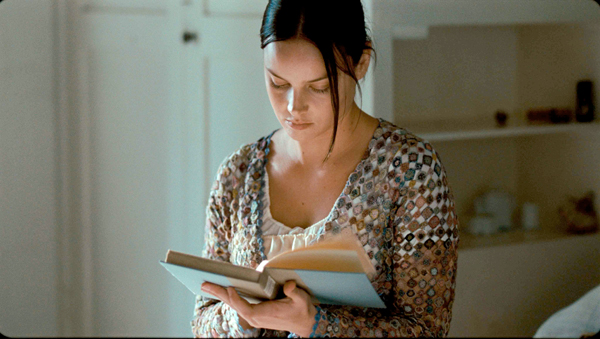
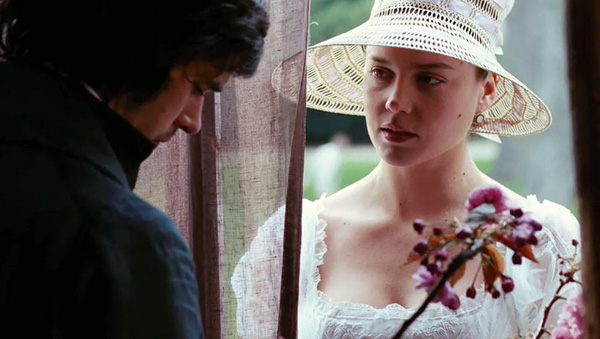
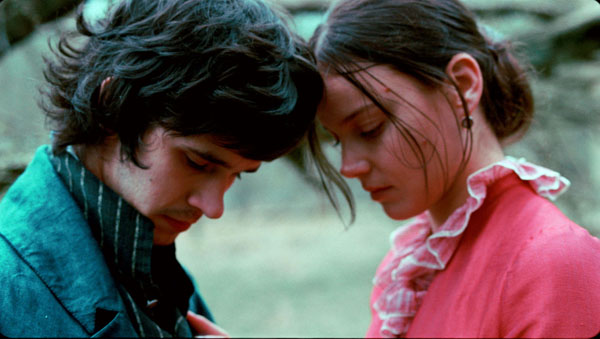
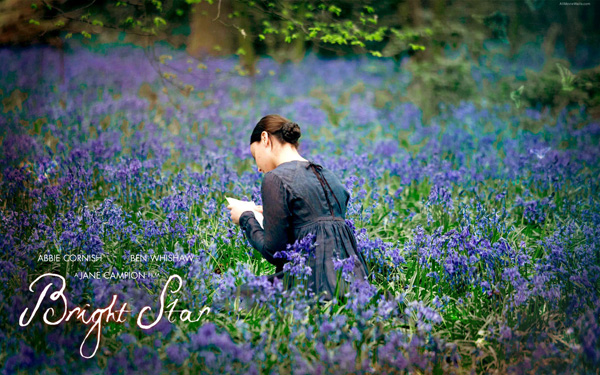
Jane Campion’s film, Bright Star, the true story of the love affair between Fanny Brawne and John Keats, is a subtle ode to romance. Fashioned around the letters the pair wrote to each other during their courtship, it is a film quite unlike many of the others which reside within the genre. Campion eschews the traditional emotional crests and falls in story progression for a more methodical, quiet pace. In so doing the inevitable tragedy resonates with a profound sense of loss. The soundtrack of the film is permeated by long periods of silence, punctuated at key moments by beautiful original music by Mark Bradshaw. The small cast could not be more perfect, particularly the role of Fanny, as played by Australian actress Abbie Cornish. Her absence from this year’s Golden Globe and Oscar nominations was an unfathomable oversight. I was also very taken with young Edie Martin, who played Fanny’s sister, Margaret ‘Toots’ Brawne. She was darling.
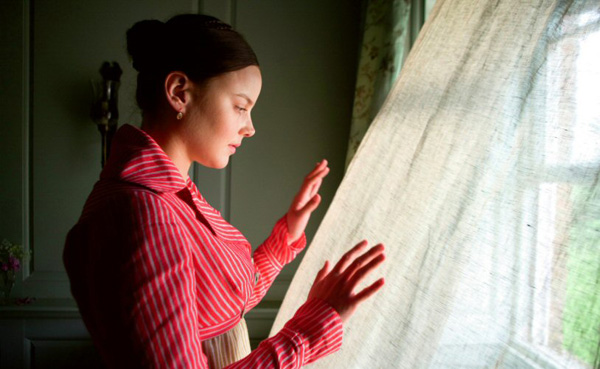
I am inadequate in my education when it comes to poetry which certain affects my ability to appreciate it to the point that I actively seek it out. And yet I can list many, many examples of poems that I would loosely classify as ones that I “love” because I’ve heard and/or seen them read. Being able to hear them read with cadence, meter, by someone who understands what they are reading opens the eyes of my understanding and then I “get it”. This is no less true with Campion’s film. She weaves the threads of Keats’ poetry throughout the film in such a way that you understand not only his inspiration, but what the muse has spoken to him.
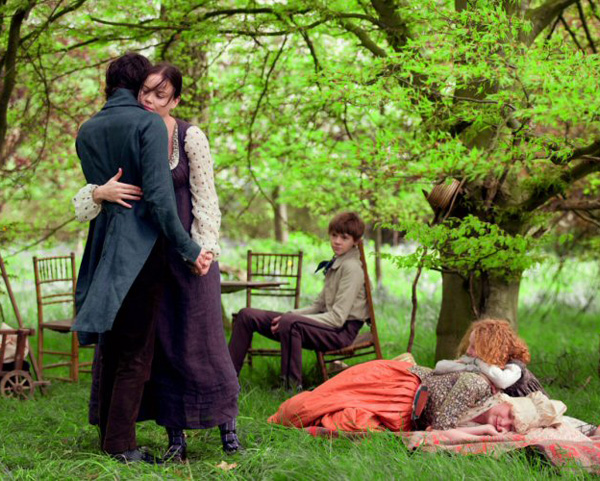
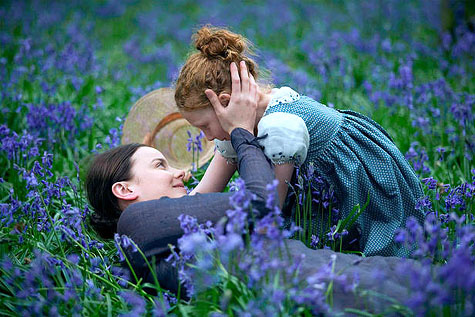
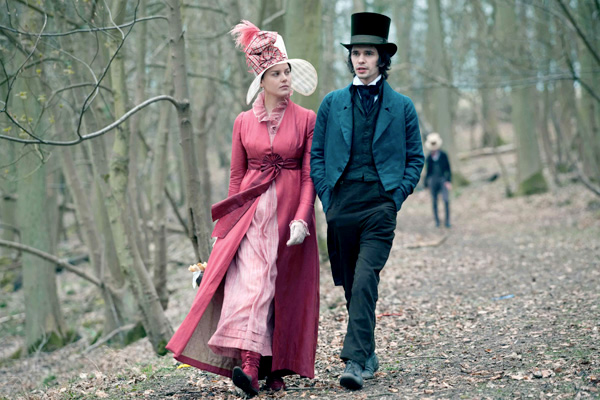
I have read a fair amount of praise and criticism of Bright Star. While I easily concede this is not a film that everyone would enjoy, and some would find immensely boring, my wife and daughter and I feel enriched by the experience. It was beautifully shot (with several serendipitous nature moments as revealed on the DVD’s paltry extras), beautifully costumed, and beautifully acted.
Rating: 4/5 stars
Where to Go From Here:
Bright Star: Love Letters and Poems of John Keats to Fanny Brawne was published as a companion volume to the film, which might be a good place to start, as would any collection of Keats’ poetry. For films I would recommend Becoming Jane, Lady Jane, and on a slightly lighter note, A Room with a View.
Glad to see the post back up 🙂 My comment before was threefold:
1. Thank you for bringing my attention to this movie! I hadn’t heard of it before and this just looks amazing. From the cinematography, to the subject matter and story itself, to the music…just everything. My kind of film. Fantastic review Carl! I’ve added to Netflix and considered just outright buying it!
2. I also watched The Fall the other night based on your recommendation a while back and just wanted you to know that I absolutely loved it! What an incredible movie. That little girl was such an incredible actress. It was stunning.
3. Finally, I know you like period pieces and this post reminded me of one of my favorites. I don’t know if you’ve ever seen the masterpiece theatre version of Daniel Deronda, but if not, I highly recommend it! It remains one of my favorites!! I own that one on DVD and it’s one that I rewatch all the time.
Chris: Thanks for recreating your comment after my blog post was inadvertently eaten. Thankfully it didn’t take me too long to recreate it. I still grumbled about it though!
Glad you enjoyed The Fall. An excellent, excellent film. The guy who plays Charles Darwin in that movie has a bit part in Tim Burton’s Alice in Wonderland.
I have not seen, nor in fact heard of, Daniel Deronda, but I will be looking for it on Netflix asap.
Our birth is but a sleep and a forgetting:
The Soul that rises with us, our life’s Star,
Hath had elsewhere its setting,
And cometh from afar:
Not in entire forgetfulness,
And not in utter nakedness,
But trailing clouds of glory do we come…
And so I answer. I like Keats, but often Wordsworth moves me more. Or maybe it’s just that Rumpole quotes him more.
This is a film I’ll be getting to watch. Thanks. I’ve not heard of the film Chris mentions, but will look into it as well.
I so want to see this movie, that I’ve come close to just buying it. I am waiting for a library copy to come available. I don’t read hardly any poetry, but I bet after seeing this I will go out and look for some of Keat’s works!
Danielle: Ah, the beauty of the Redbox! All this pleasure for only a dollar! 🙂 I suspect people will dump copies of this soon and the price will go down. When that happens I’ll probably snag a copy for myself.
Richard: You are well ahead of me, I comparatively have so little experience with poetry. At the very least I can say that I do know what I like when I see it…or hear/read it as the case may be.
Carl, try this:
Wordsworth
Ode – Intimations of Immortality from Recollections of Early Childhood
it’s in most anthologies of British Poetry, and can be easily found online.
Carl, you have done both Keats and Jane Campion’s movie proud; this is a beautiful review! I will scurry to nab the DVD asap. Thank you.
ds: Thanks! I hope you find it as rich an experience as we did.
Richard: Thanks, I’ll check online to see if I can track it down before going the more conventional route (the library)
This just arrived to watch at our house and my husband rolled his eyes. I let him off watching it last night but after reading this review (and seeing those gorgeous photos) I think we’ll be viewing it tonight!
Peta: Ha! I hope he doesn’t suffer too greatly. 🙂
Carl, thanks so much for featuring this film. I cannot wait to see it and have been mooning over what Keats book to read. I’m glad you mentioned the companion book above. The search is over.
claire – well, there is the Modern Library edition The Complete Poems of Keats & Shelley. That will pretty much get you all you want or need, all in a mere 914 pages (including index).
I heard so many good things about this film. I was crushed that it never made it to any cinemas near me, but I’m hoping to rent it as soon as I can!
Jenny: I wish now that I would have seen it on the big screen, if only for the scenes where she was in that field of blue flowers!
Richard: 914 pages, eh? Sounds like a quick read. 😉
Claire: I’m on the lookout for some Keats myself!
Thanks Richard!
Such a beautiful post 😀
I put Bright Star at the top of my Netflix queue. I should get it Tuesday. I’ve been meaning to get into poetry. I can’t read it – I just don’t have the patience. But I have bought audio book collections of poetry – and I can listen to it if I make the time. I definitely need to make more time for poetry.
I do have a recent Keats connection, of a strange sorts. He is a character in Hyperion and The Fall of Hyperion by Dan Simmoms. That is, Keats has been recreated in the far future as a cybrid, half man-half machine. And I have to second Chris’ thanks for recommending The Fall. I too watched it after your review. It’s very beautiful. Carl, you have an eye for beauty.
Jim: Thanks! Oddly enough I was wandering around Melissa’s blog today (the artist host for Once Upon a Time) and I watched the trailer for The Fall on her site. The trailer itself is a thing of beauty.
I want to understand and appreciate poetry more than I do. I do have some appreciation for it, but it doesn’t stay on my radar. I bought my wife, among other things, the companion book for Bright Star for her birthday (today) and I plan to read it after she is done. It is cool that Simmons has Keats as a character. Makes me want to read those even more now.
Like you mention, I do much better with poetry if I am hearing it rather than reading it, but I’m reading a poetry book right now by Catheryne Valente and am enjoying it. Dark, folklorish, Grimm stuff.
I was lucky enough to visit the Keats museum in Rome a couple of years ago, quite a moving experience. I have a copy of this film now and am looking forward to it even more since your review. Thanks!
I LOVED this movie, and your post reviewing it is just beautiful (all the stills are great!). Recently I read somewhere that Ben Whishaw played Hamlet a few years ago, and now I am wishing that I had managed to be in London to see it! He was perfect as Keats, and I imagine he would be a definitive Hamlet.
Jo: He was perfect as Keats, wasn’t he. And thanks for the compliments.
Mariel: You’ll have to let me know what you think of it once you see it. And the Rome trip sounds WONDERFUL!!!
I too loved the movie. I am looking for the written arrangement of the vocal music that Mark Bradshaw arranged and sang for the film–it was originally a Mozart work for 13 winds. Any idea how I can locate it? Google and Bing searches only take me to the soundtrack and nothing shows up in online sheet music stores. Thanks.