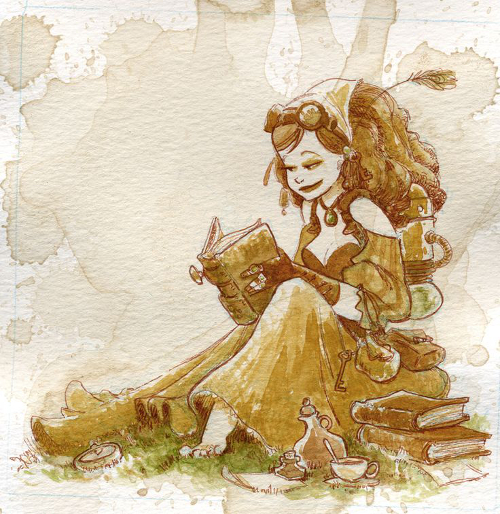
(Chamomille 2, by artist Brian Kesinger)
While sitting in my recliner in our little library oasis, I can turn my head to the left and see the framed print of the above image, one of Brian Kesinger’s fabulous Tea Girls illustrations. I am drawn to any artwork that depicts characters reading as it combines two of my passions. Looking at this picture fills me with all kinds of warm thoughts about the adventures I have had between the pages of good books.
It is these warm thoughts that I revisit today with a look back at the books that have left their mark upon me in 2015.
Twenty-fifteen saw me completing fewer books than I have in the nearly 11 years that I have been writing here at Stainless Steel Droppings. Fortunately the decrease in reading was not due to negative circumstances, but was in fact the result of a number of satisfying experiences that I would not trade: Spectrum Fantastic Art Live 4, increased time spent with friends and family, increased involvement in my local church, training for a few important-to-me trail runs, and more board gaming and video gaming.
2015 has been a year of growth and change. It hasn’t always been easy, and there were certainly personal and work challenges, but the decline in number of books completed did not have an impact on the quality of the books I experienced.
One of the joys of this time of year is finding out what books you most enjoyed. You can discuss these in the comments, of course, but I have also put a Mr. Linky wizard at the end of this post for you to link any post(s) you may have done discussing your favorite books of the year.
FICTION
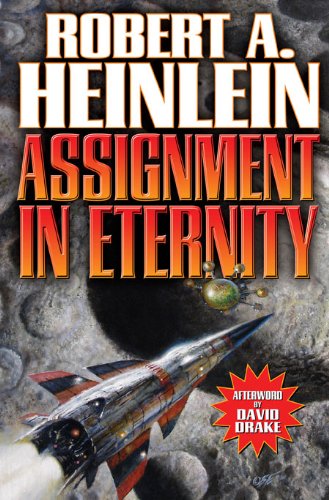
Assignment in Eternity is a collection of four short works of fiction by Robert A. Heinlein, two of which would better be classified as novellas today.
The four stories in this collection were all published in magazines in the 1940’s and showcase Heinlein’s skill in the art of effective storytelling. Themes of advanced supermen, telepathy and telekinesis, time travel and bioengineering are examined in engaging, and sometimes humorous, ways.
Robert A. Heinlein would occasionally write a female character who transcended the gender barriers and stereotypes of the time in which he was living, and we see that in the case of the final story in this collection, “Jerry was a Man”.
While The Green Hills of Earth remains my favorite Heinlein short story collection, Assignment in Eternity is a first-rate collection of stories and would be a great place to start for those unfamiliar with his short ficion. There are thematic similarities in all four stories and yet each is unique and interesting on its own. The seeds of what Robert A. Heinlein was to become are planted in these tales.
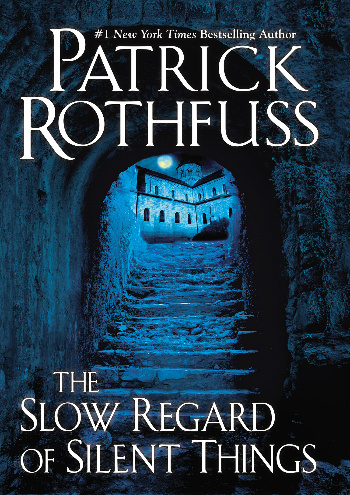
The Slow Regard of Silent Things is a novella written by author Patrick Rothfuss, set in the world of The Kingkiller Chronicles. The Name of the Wind and A Wise Man’s Fear are the two novels of this trilogy that are currently in print.
I would posit that you do not have to be familiar with the other two novels to both enjoy and be impacted by Auri, the protagonist in this short, beautiful story. Auri is a minor (in terms of page count) character in Rothfuss’ novels, but she is much beloved by readers.
She is beloved and quirky, and enigmatic as all get out.
The Slow Regard of Silent Things reminds us of the importance of small things, and seemingly small people. It is a story that is not traditionally story-shaped, which will frustrate some–Patrick Rothfuss seems to understand this based on his Author’s Forward and Endnote–and will mesmerize others.
I do not believe it would be a major risk to state that, for every reader who finds themselves enchanted by The Slow Regard of Silent Things, that experience will be highly personal in nature. Auri’s relationship with the inanimate objects that populate her world reminded me of the child I once was, and how that child’s imagination and inner dialogue informed, and continues to inform, the adult I am today.
I found The Slow Regard of Silent Things to be almost Gaiman-esque in its lyricism and I was transfixed by the rhythm of Auri’s daily customs. Reading The Slow Regard of Silent Things is like gazing at a fine jewel…the slightest movement, the most minute adjustment, reveals a different facet. The book itself is a beautiful little hardback volume, illustrated within by artist Nathan Taylor.
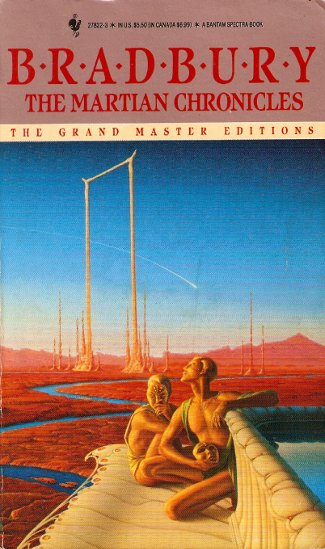
I am not certain why it took me so long to read one of Ray Bradbury’s most famous works. I have long been acquainted with his consummate ability to tell stories from reading numerous short stories and his novel Dandelion Wine. What I can tell you is that it was well worth the wait.
Wow! The Martian Chronicles is wonderful!
Ray Bradbury’s classic story of Earth’s progressive colonization of Mars, and the devastating effects that has on the native population, is a series of chronological vignettes, some of which were previously published as short stories in a variety of magazine publications prior to 1950. The stories are told from both human and Martian points of view over a period of months and years beginning in the then future of 1999 through late 2026.
A firing rocket brings early summer to a wintery Ohio countryside; a Martian wife in a dissatisfied marriage tells her husband of her recurrent dream of a man from Earth coming soon to their planet, prompting her husband to make a decision that will forever effect both humans and Martians; an expedition of men from Earth land to discover a familiar small town and the presence of friends and relatives long dead; a colonist of a later expedition takes exception to the behavior of his fellow crew members to their new home and reacts in the only way that makes sense to him…a way that ends in blood…
Ray Bradbury uses the mysteries of the red planet to shine a mirror at humanity, reflecting our hopes, dreams and propensity for destruction in a series of interconnected tales written with the graceful nostalgia that made him a much-celebrated and beloved author.
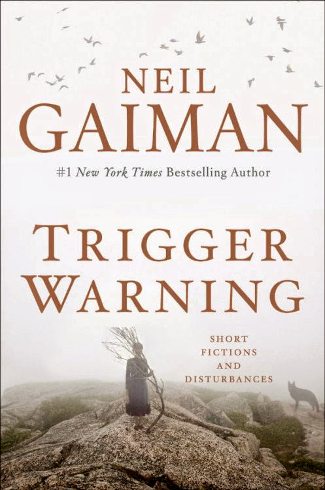
“I grew up loving and respecting short stories. They seemed to me to be the purest and most perfect things people could make: not a word wasted in the best of them. An author would wave her hand and suddenly there was a world, and people in it, and ideas. A beginning and a middle and an end that would take you across the universe and bring you back.” (Neil Gaiman, in his Introduction to Trigger Warning)
Nobody writes like Neil Gaiman.
A bold statement, and one that could be written with conviction about any beloved author, because the statement encapsulates a two-fold truism: each author has their own way of crafting the stories that occupy their head and heart, and each reader has their own personal encounter with the stories that captivate their imagination.
We all have our favorite authors, those whose skill–for any author whose work inspires high esteem could be said to possess some skill–and creativity combine to make their stories into the ones we cherish and hold closest to our hearts. Their ability to capture our affections could almost be described as magical for all the success we would have in defining just what combination of ingredients make their stories so potent.
Neil Gaiman is one of those authors, for me.
I was initially concerned that this would be a series of very dark, disturbing stories. Gaiman has certainly crafted stories over the years that meet this definition and more often than not they are my least favorite stories despite his creative talent being on full display. For my personal experience, Trigger Warning includes the kind of dark and disturbing stories that I tend to describe as “delicious”. They tickle the spine, they give a little fright…they seem somewhat innocuous, perhaps not that dark at all, until you take a second look, and then, brrrrr…here come the chills.
In addition there were loving tributes to Ray Bradbury, and to Sir Arthur Conan Doyles’ world’s greatest consulting detective. I both read and listened to this collection and enjoyed each as a very unique and satisfying experience.
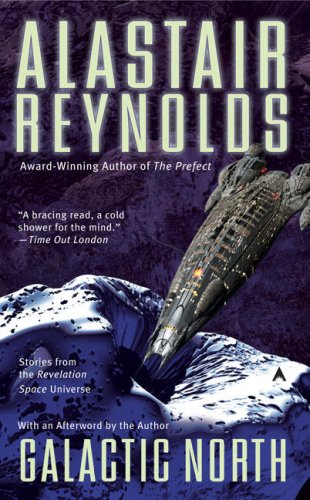
Many moons ago John DeNardo turned me on to a then new-to-me author with his reviews of Chasm City and the short story collection, Galactic North. In conversation he shared his opinion that either would be good single-book starting places for adventuring in Alastair Reynolds’ future history universe, Revelation Space.
I chose Chasm City, and all these years later it remains one of my favorite science fiction novels.
My friend Jeff Smith had discovered a hard cover copy of Galactic North and gifted it to me for Christmas 2014, and I am glad he did, as it prompted me to sample Reynolds’ short fiction for the first time. I was not disappointed.
The eight stories collected in Galactic North are richly diverse, layered stories that succeed in introducing readers to the Revelation Space universe through characters and situations that are varied and complex while remaining accessible to a wide readership.
The Revelation Space stories are space opera in a pure sense, but it is hard space opera. Alastair Reynolds has a doctorate in astronomy and has worked as part of the European Space Agency. He brings to his writing a desire to bring plausible scientific and technological advancement to the future he has created.
In these eight stories, that put the lie to the word short given their length, we see humanity sectioned into people groups based on the level of technology integrated into their physical selves, or lack thereof. We see a culture of people, the Conjoined, who retain their individuality while existing in a hive-mind collective. We meet the results of genetic experimentation for varying purposes. We see the existence of a number of extraterrestrial races and how they interact with/intersect with human beings.
With consummate skill, Alastair Reynolds presents a truly advanced, alien future inhabited by beings with the same hopes and dreams, and the same selfish and petty ambitions, that we have today. These stories offer adventure, romance, mystery and suspense with strong characterization in an engaging vision of the future.
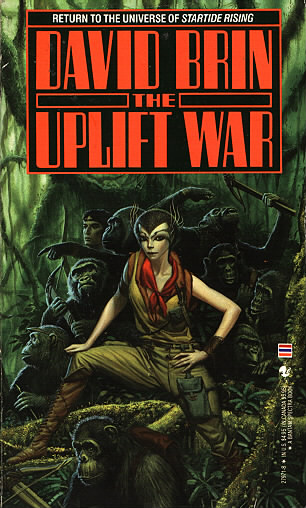
I read David Brin’s Hugo and Locus Award winning novel, The Uplift War, as it was one of our selections for the Science Fiction Book Club to which I belong, and it is one of my great regrets that I did not take the time to review it immediately after turning that final page.
The Uplift War is amazing…and hard to describe without words upon words upon words, hence the difficulty that ultimately lead to my reluctance to commit to a written review.
Brin has created a future in which mankind is not the dominate species, but is instead just one player in a galaxy filled with alien intelligence. Various species, including humanity at one time, have been “uplifted”, which is a procedure that gives animals sentience. This novel focuses on a planet called Garth, to which Earthlings have laid claim, and the invasion of the avian Gubru race. Garth is populated by Earth men and women and the neo-chimpanzee race that they have uplifted.
What follows is a character-driven, idea-filled story that is wonderfully complex and yet readily accessible. The Uplift War is the second novel in a trilogy, and yet I had no trouble emerging myself in the world Brin has created because he does such a tremendous job of laying out the uplift concept, the various alien cultures, and the ecological issues of the planet Garth simply by allowing readers to journey along with so many engaging characters.
I am doing a poor job of explaining the novel, but am encouraging you most ardently to put it on your list of books to be read. It is a novel worthy of its acclaim.
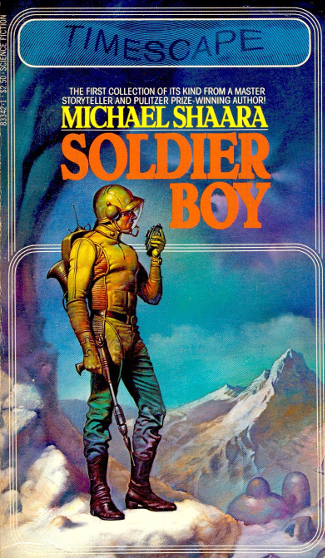
Soldier Boy is a collection of short stories by Pulitzer Prize-winning author Michael Shaara. It is another book that I regretfully did not review, although I am in the process of a second read-through of the collection and plan on reviewing it in January as part of Vintage SF Month.
It was a wonderful bit of kismet that led me to the discovery of author Michael Shaara, and his short story collection, Soldier Boy. I went to visit family in Minnesota in June, and I had on my Minneapolis book shopping agenda to track down as many books as I could off of a list given to me by Joachim Boaz, as a means of assisting him in procuring books he has been wanting to read, Soldier Boy being one of those on the list.
When I came across the book I pulled it out and the cover art caused me to pause. It looked like the work of Boris Vallejo, and I was curious if I was correct. Looking through the book revealed nothing, however, it did cause me to read more about the book itself. Seeing the words “Pulitzer Prize-Winning Author” on the cover of a science fiction collection with short stories written largely in the 1950’s was uncommon enough that I delved further, and the story descriptions completed the sale. There were two copies of the book on the shelf, so I grabbed one for us both.
I immediately started reading it that night back in our hotel room and I was hooked. I devoured the stories one after the other, acutely aware of how Shaara’s voice, while uniquely his, echoed that of other authors from this time period that I admire.
At the end of the book Michael Shaara discusses how each story came to be, which added an interesting dimension to the connection I had already made. It was an unexpected surprise and one that adds significant value to an already worthwhile collection of short fiction.
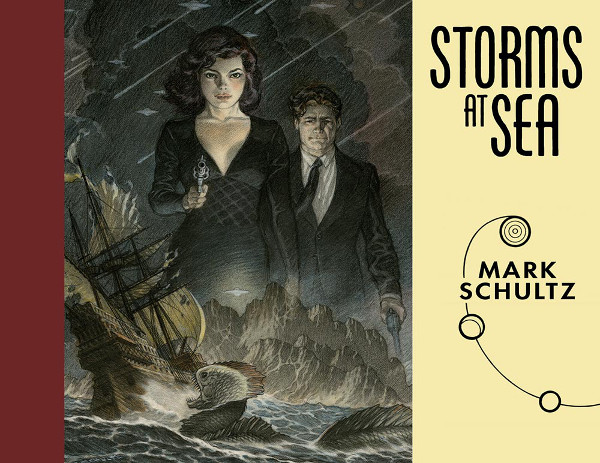
Storms at Sea is a novella written and illustrated by Mark Schultz. Procuring a signed copy of this gorgeous hardback treasure was the first item on my agenda at Spectrum Fantastic Art Live 4 back in May, and I am quite giddy about owning the first signed copy.
With Earth’s natural energy reserves in serious decline, newspaper promises of a new energy source were falling on deaf ears. Humanity was used to empty promises. Dr. Arthel Vermund was the one scientist who could possibly solve the world’s energy crisis, but his niece and research assistant, Asha, had just called his retired military bodyguard, Griff, to report that Vermund was dead.
It appeared the death was from natural causes, and Griff would have preferred to stay home, but the need for answers and the request of a pretty girl brought him to Dr. Vermund’s laboratory-in-residence. Here he would find answers, though the incredible and unbelievable answers he would find were not those that he expected.
Mark Schultz’s illustrated novella taps into our dreams and fears to produce a story that both shows and tells while enveloping the reader in old school wonder. Storms at Sea was a project long in the making, and you can see Schultz’ dedication to the project in every word and illustration.
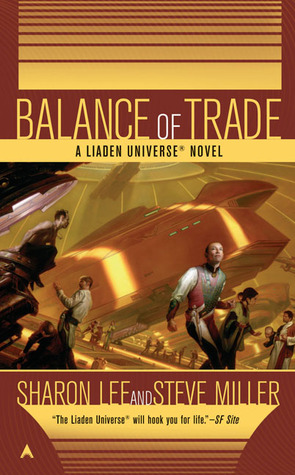
Balance of Trade is something of a coming-of-age story for young Jethri Gobelyn, a space-born Terran assistant trader who finds himself in a fish-out-of-water situation when he is forced to leave the family ship to apprentice with a Liaden Master Trader.
Balance of Trade is the third novel in the Sharon Lee and Steve Miller Liaden Universe series. It is set 200 years before the events that have been the focal point of the bulk of the series. The fascinating Liaden and Terran cultures that I have enjoyed in the handful of novels and short stories that I have read are on display here, woven into the story as skillfully as I have come to expect from this husband-wife writing team. But the greatest pleasure of these space operas is the interplay of the characters, and the attachments one makes with them as the story unfolds.
Science fictional universes are often exciting places to visit, but we wouldn’t want to live there. I never feel that way when reading the Liaden stories. I think part of the reason is that there is a familiarity to the lives being lived, even if the trappings are more advanced than our own. These aren’t stories about titanic battle for control of the galaxy, which are fine stories in their own right. No, these are the stories of ordinary and extraordinary people going about the business of becoming who they want to be…not unlike what we do every day.
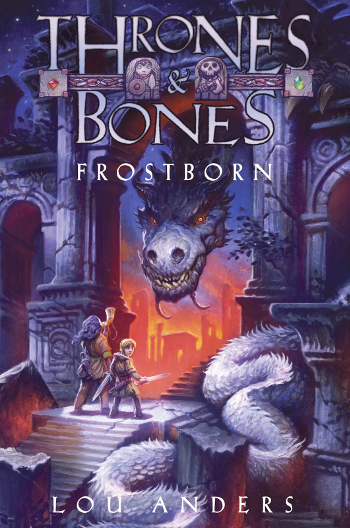
Thrones and Bones: Frostborn is the debut novel from former Pyr Books editor Lou Anders, and it is readily apparent that years of editing great books has served Anders well.
This young adult novel is an entertaining joyride through a fantastical realm informed by Anders’ research of Norse mythology. Anders expertly weaves mythological detail with contemporary styling to create an intriguing world that he populates with characters that should appeal to young female and male readers…as well as those of us who remain young at heart.
There are times in my adult life where I’ve read otherwise well-written YA books that either have material that does not feel age appropriate (my opinion only) or is so sophisticated that an advanced reader would enjoy it but it lacks the broad target audience appeal. The entire time I was reading Frostborn I was thinking about how much fun this book would be to read aloud. One day I hope to have the opportunity to read it aloud to my grandchildren.
I really enjoyed adventuring with Karn and Thianna, and am thrilled that I will get to visit them again as the second novel, Nightborn, is out now, with more on the way.
It was hard to pick favorites, as this was a really strong year of reading for me despite only finishing 33 books. Looking back I had no idea that I had read so many short story collections. That certainly was not intentional, yet those who frequent this site know that I am inordinately fond of the short story format.
Honorable mentions would have to go to the first volume of the Man-Kzin Wars by Larry Niven, Poul Anderson and Dean Ing and to Between Planets by Robert A. Heinlein.
I chose not to include re-reads in this list, but Second Foundation by Isaac Asimov, which I read for the third time, and The Night Circus by Erin Morgenstern, which Mary and I listened to on audio book on our Minnesota trip, are definitely favorites.
ART BOOKS
This was a great year for SFF art collections. Had I gotten through more of the ones I bought, this group would no doubt be larger, but these stand outs have to be mentioned.
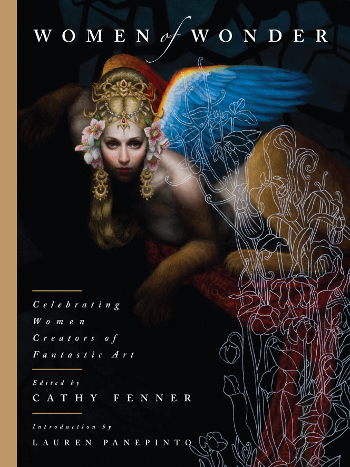
Long-time co-editor of Spectrum: The Best in Contemporary Fantastic Art got back into the business of bringing Fantastic art to fans with Women of Wonder, a collection featuring stunning art from female creators.
Women of Wonder is laid out beautifully, with two-page spreads featuring a portrait of the artist and a full-page example of their work. The artists Cathy Fenner chose to feature are varied in their creativity, yet consistent in the quality of their work.
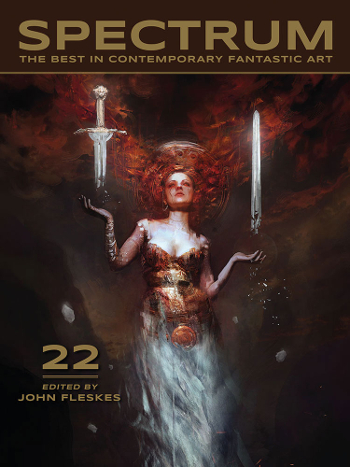
The 22nd volume of Spectrum: The Best in Contemporary Fantastic Art continues the tradition of showcasing genre art submitted over a number of categories by some of the best artists working today.
The arrival of the Spectrum annual is one of the highlights of my year, and this year’s volume was extra special from having been present at the Spectrum 22 Awards Ceremony in May. If you are a fan of science fiction, fantasy, and/or horror art, this truly is a must-buy each and every year. John Fleskes has built upon the foundation created by Arnie and Cathy Fenner to create an incomparable art annual.
STATS
Books read: 33
Books by male authors: 25
Books by female authors: 4
Books by both male and female authors: 4
Science fiction: 17
Fantasy: 6
Childrens: 1
Art: 4
Nonfiction: 5
New to me authors: 10
Re-reads: 4
Authors read more than once this year: 2
Books read that were purchased this year: 12
Books read that were previously owned: 11
Books read that were gifts: 7
Books read that were review copies: 1
Books on loan from friends/library: 2
All in all it was a pretty great year, and many of the books I read (and re-read) this year are ones I would love to revisit. As promised, you will find the widget below for you to link to any post(s) you may do regarding your favorites of the year. Please feel free to include your link and/or to discuss your favorites in the comments section.
ohhhh boy… just posted my last book of the year.. I have a list of my books for the year but nothing written yet… I will come and post on the widget when it’s posted… !!
(ps: I had an email from author Michael Scott from Ireland on Christmas Day.. it seems he is writing a western now!! I am still stuck on his YA Flamel books lol)
That was a nice Christmas surprise, Pat!
I look forward to seeing your list. Usually mine doesn’t get done until the last day of the year, but I finished the last book I’m likely to finish last night and figured it would be nice to get it done while I had a free day.
I have The Martian Chronicles on my shelf. It was an alternate selection for that year in my 1950s SF challenge. I really need to read it. Also, you keep mentioning the Liaden Universe. I might have to look into those books this year. I could stand to get immersed in a new series as I’m mostly up to date on those I’m already invested in.
And…how did you only buy 12 books. O.M.G. Seriously, though, it sounds as if you had a fantastic year of experience. Here’s to an equally fulfilling 2016!
Oh I didn’t only buy 12 books, I assure you! I bought twenty-some used books in Minnesota alone. But I did cut way back on buying in general starting in August, and this ended up being a year when I’ve bought the least amount of books since I started blogging.
I would again recommend starting with Fledgling, or Balance of Trade, for Liaden. If you like them you can then choose to either go back and read every thing in chronological order, or bounce between series in the universe.
I was doing great on my 50’s challenge at the start of the year, but then fell off the wagon with all that was going on.
I’m with you, here’s to a great 2016!
Great list Carl – I’m a bit behind putting something together but will revisit and leave a link once I get my act together.
I bought Dandelion Wine this year and I’m looking forward to picking that up. Great to see Gaiman on here too. I love his writing and his style – like you, I’m not as drawn to his really dark material (although I am enjoying the Sandman) – I still love The Graveyard Book.
Lynn 😀
The Graveyard Book is beautiful. I contend that it is one of his best, and it is certainly my favorite after Neverwhere. I’ve read and listened to it many times.
Look forward to seeing your list. I’ll be curious to see what you think of Dandelion Wine. It is the same basic concept as The Martian Chronicles, with short stories wrapped in an overall narrative.
I hadn’t realised that – in fact I don’t really know what to expect from Dandelion Wine but given my past two experiences with Bradbury I’m really looking forward to it.
Lynn 😀
Looks like you read some great ones! I enjoyed the Trigger Warning collection, and once again was struck by the power of Gaiman’s fantastic introductions.
He certainly does introductions right. I wish all authors did the same thing. I think having even that basic information adds depth the stories.
I loved TRIGGER WARNING and THE UPLIFT WAR. I read ASSIGNMENT IN ETERNITY so long ago, I’d have to reread it to express an informed opinion but all of Heinlein’s early work is very good. I have BALANCE OF TRADE and GALACTIC NORTH on my Read Real Soon stack. Looks like it was a great reading year for both of us!
I got the Baen collection The Man Who Sold the Moon and Orphan in the Sky for Christmas and I cracked into that last night. Most of the stories in the collection are ones I haven’t read, but I’m also excited that it has Roads Must Roll in it as I love that story.
I’m sure we do have some good reading ahead of us, that is for certain. If all I read next year were books I’ve seen on my shelves of late and had a hankerin’ to read, I would have more than enough good reading to fill my year and then some.
I still haven’t gotten around to reading The Slow Regard of Silent Things, I’m looking forward to getting to it though.
I read The Martian Chronicles a few years back, really enjoyed them. Must read more Bradbury.
I hope you enjoy the Rothfuss. It is one I want to re-read soon.
There is a lot of Bradbury I have yet to get to. I’ve still never read Fahrenheit 451. Not sure how I got through the public school system without reading that one.
I have read the Heinlein, Bradbury, Brin, and Anders. Though you liked the latter a lot, for me it was unappealing and went back to the library one-third read. The others, excellent.
My favorites post will be up late tomorrow, and includes novels (a good many mysteries), short story collections (much Sherlock Holmes), and two art books.
You did read a lot of mysteries this past year, as I recall, and I remember seeing some Holmes on there. Will be interested to see your post.
I’m in a Heinlein mood right now and am reading one of the books of short fiction Mary got me for Christmas.
The post is up. For immediate info, the top SFF books, 4 of the top 9 novels I read, are
Voyage of the Basilisk by Marie Brennan, fantasy (Lady Trent)
The Human Division and The End of All Things by John Scalzi, science fiction (OMW)
A Darkling Sea by James L. Cambias, science fiction
One Damn Thing After Another by Jodi Taylor, fantasy
I need to read both of those Scalzi books. I read most of Human Division as it came out episode by episode, but I need to re-read the book and then read The End of All Things.
I have the first two Brennan books on my shelf to read. Was just looking over them a couple of days back. Lovely books.
Sounds like you’ve had a great year! You’ve done less reading, but it doesn’t make it any less productive considering how thoughtful you are about what you read. I love Ray Bradbury and I loved The Martian Chronicles, which I think was my first real science fiction book as a kid. Alistair Reynolds is an author I keep meaning to try and I’ve been thinking of checking out Slow Bullets this year.
Wow, that is a pretty great start to read Martian Chronicles as your first read science fiction book when you were a kid. Sets the bar high too.
My first were the various Star Wars related novels in the late 70’s, but the first non-SW book was Larry Niven’s, A World Out of Time. I still enjoy the story, as I’ve read it several times, but I know a big reason I am so fond of it is that connection I made with it at an early age. It was also the first science fiction book I remember buying for myself. I can still remember the store, how the shelf looked where I found it, taking it home and diving into it.
I am pleased to hear that while your numbers are the quality is certainly not; which I think is the most important thing alongside enjoyment. Plus as always you have some amazing cover art in this post! I wish you more great reading in 2016 🙂
Quite a selection! I’m actually embarrassed to admit I’ve yet to read a Ray Bradbury, so am trying to finish up on Something Wicked This Way Comes, and I’m loving it. Will have to check out the rest of his work soon. Thanks for the reminder!